Quick Answer
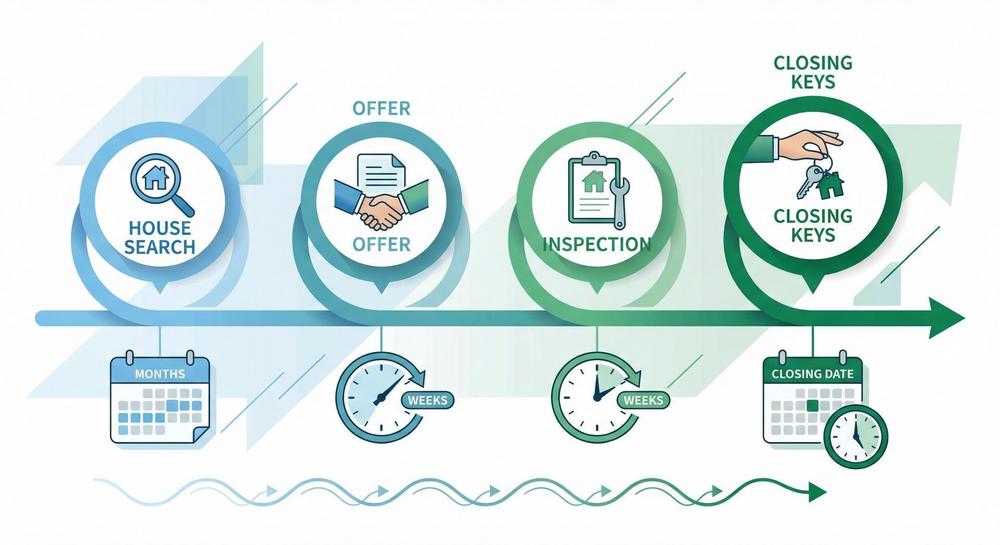
After your offer is accepted, you enter a 30 to 60 day period called “under contract.” During this time, you’ll schedule a home inspection, the lender orders an appraisal, a title company does a title search, and you complete a final walkthrough before closing. Each step has a purpose, and each one gets you closer to the keys.
The Timeline at a Glance
| Step | When It Happens |
|---|---|
| Earnest money deposit | Within 1–3 days of acceptance |
| Home inspection | Within 7–14 days |
| Appraisal | Within 2–3 weeks |
| Title search and insurance | Weeks 2–4 |
| Final loan approval | Week 3–5 |
| Final walkthrough | 1–2 days before closing |
| Closing day | 30–60 days after acceptance |
Step 1: Submit Your Earnest Money
Within a few days of acceptance, you’ll deposit your earnest money into an escrow account. This shows the seller you’re serious. The amount is usually 1% to 3% of the purchase price. It goes toward your down payment and closing costs at the end. Learn more about earnest money here.
Step 2: Schedule the Home Inspection
This is one of the most important steps. You hire a licensed inspector to examine the property from top to bottom.
What They Check
Roof, foundation, plumbing, electrical, HVAC, windows, and more. Here’s a detailed guide on what to expect.
After the Inspection
You’ll receive a detailed report. If the inspector finds issues, you have options: ask the seller to repair them, negotiate a price reduction, request a closing credit, or, if the problems are too big, walk away using your inspection contingency.
Step 3: The Appraisal
Your lender orders an appraisal to confirm the home is worth what you’re paying.
How It Works
A licensed appraiser visits the property, evaluates its condition, and compares it to recent sales in the area. They produce a report with their estimated value.
What If It Comes in Low?
If the appraisal is lower than your agreed purchase price, you have a few options:
- Negotiate with the seller to lower the price
- Pay the difference out of pocket (the gap between appraised value and sale price)
- Walk away if you have an appraisal contingency
Low appraisals don’t happen on every deal, but they’re more common in hot markets where bidding wars push prices above recent comps.
Step 4: Title Search and Insurance
The title company researches the property’s ownership history to make sure the seller actually has the right to sell it.
What They Look For
- Outstanding liens or debts against the property
- Ownership disputes
- Easements or restrictions
- Unpaid taxes
Title Insurance
You’ll purchase title insurance, which protects you if a title problem shows up after closing. Your lender requires it. It’s a one-time cost paid at closing.
Step 5: Final Loan Approval
While inspections and title work happen, your lender is processing your loan.
What to Do (and Not Do)
- Do respond quickly to any lender requests for documents
- Do keep your bank balances stable
- Don’t open new credit cards or make big purchases
- Don’t change jobs or income sources
- Don’t move money around between accounts without telling your lender
Lenders re-check your finances right before closing. Anything that changes your credit or income can delay or kill the deal.
Step 6: Final Walkthrough
One to two days before closing, you’ll walk through the home one last time.
What to Check
- Are agreed-upon repairs completed?
- Is the home in the same condition as when you made the offer?
- Are all included appliances and fixtures still there?
- Are there any new issues (water damage, broken items)?
If Something Is Wrong
Tell your agent immediately. Most issues can be resolved before closing. In rare cases, closing gets delayed until the problem is fixed.
Step 7: Closing Day
This is the day you’ve been working toward. You sign the paperwork, pay your closing costs, and get the keys.
What to Bring
- A valid photo ID
- A cashier’s check or wire transfer for your down payment and closing costs (your agent or title company will give you the exact amount)
- Any remaining documents your lender needs
What Happens
You’ll sign a stack of documents: the loan agreement, deed of trust, title documents, and more. The title company or attorney walks you through each one. The whole meeting usually takes 1 to 2 hours.
Then You Get the Keys
Once everything is signed and the funds are transferred, the home is yours. Congratulations. You just bought a house.
Frequently Asked Questions
How long does it take to close after your offer is accepted?
Most closings happen 30 to 60 days after the offer is accepted. Cash deals can close faster, sometimes in 2 to 3 weeks. Financed purchases typically take 30 to 45 days.
Can the seller back out after accepting my offer?
It’s rare, but sellers can back out under certain circumstances (unresolved contingencies, contractual issues). Once both parties sign the purchase agreement, it’s a binding contract. If the seller backs out without legal grounds, they could face penalties.
What are closing costs and how much should I expect?
Closing costs include lender fees, title insurance, taxes, and other charges. They typically run 2% to 5% of the purchase price. On a $250,000 home, that’s roughly $5,000 to $12,500.
Bottom Line
The time between an accepted offer and closing day involves several important steps. Each one protects you as the buyer. Stay organized, respond quickly to requests from your lender and agent, and avoid making big financial changes. Before you know it, you’ll be holding the keys to your new home.