Quick Answer
You get started investing in real estate by saving money, learning the basics, and buying a property that earns more than it costs. Most beginners start with a single rental home. Save for a down payment, get pre-approved for a loan, and find a property in a good location.
Step 1: Learn Before You Spend
Don’t buy a property until you understand how the numbers work. Real estate investing is about cash flow - the money left over after you pay all your bills.
What to Learn First
- Cash flow – Rent minus mortgage, taxes, insurance, and repairs.
- Cap rate – How much return you get compared to what you paid.
- The 1% rule – Monthly rent should be at least 1% of the purchase price.
You don’t need a degree. Read a book, watch videos, or talk to a local investor. Just learn the basics before you spend money.
Step 2: Get Your Finances Ready
You need money saved and your credit in decent shape.
What You Need
- Down payment – Usually 20–25% for an investment property.
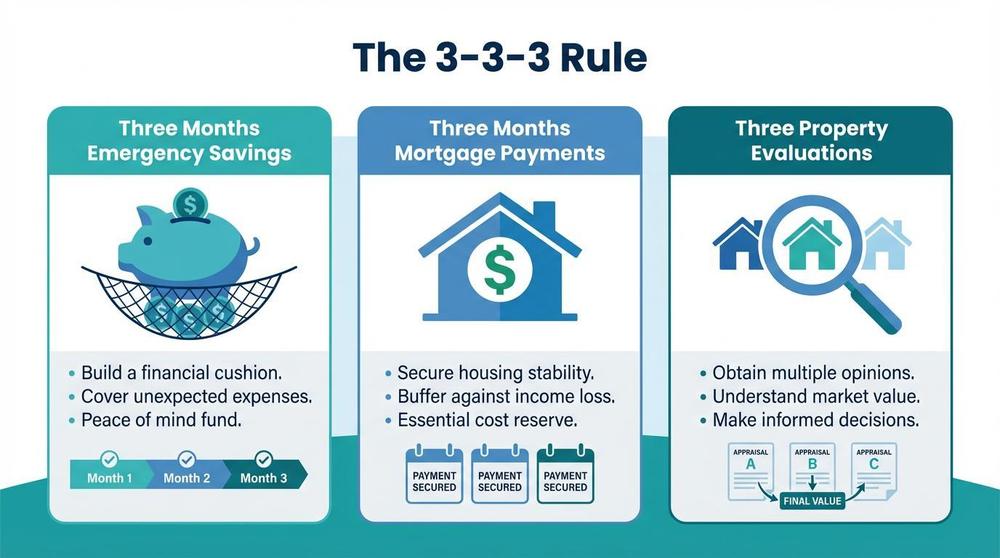
- Emergency fund – At least 3 months of expenses (see the 3-3-3 rule).
- Good credit – 620+ for most loans. Higher is better.
Talk to a lender early. They’ll tell you what you can afford and what loan options are available.
Step 3: Pick a Strategy
There’s more than one way to invest in real estate. Pick the one that fits your budget and goals.
Common Strategies for Beginners
- Buy and rent – Buy a home, rent it out, collect monthly income.
- House hack – Live in one unit of a duplex and rent the other.
- Fix and flip – Buy cheap, fix it up, sell for more. (Higher risk.)
- Buy and hold – Buy property, hold it for years, let it grow in value.
Most beginners start with buy-and-rent or house hacking. These are lower risk and easier to manage.
Step 4: Find the Right Property
Location matters more than the house itself. Look for areas with steady rent demand and low vacancy rates.
What to Look For
- Strong rental demand (near jobs, schools, or colleges).
- Low crime rates.
- Properties priced below market that need minor work.
- Positive cash flow from day one.
What to Avoid
- Homes that need major structural work.
- Areas with high vacancy rates.
- Properties where rent won’t cover the mortgage.
Work with a local real estate agent who knows the investment market. They can show you deals you won’t find online.
Step 5: Run the Numbers
Every property needs a basic math check before you buy.
Simple Cash Flow Formula
Monthly rent – (mortgage + taxes + insurance + repairs + vacancy) = cash flow
If the number is positive, the property makes money. If it’s negative, walk away.
Example
- Rent: $1,200/month
- Mortgage: $700
- Taxes & insurance: $200
- Repairs budget: $100
- Vacancy reserve: $100
- Cash flow: $100/month
That’s a basic deal. It won’t make you rich overnight, but it builds wealth over time.
Step 6: Buy Your First Property
Once the numbers work and you’re pre-approved, make an offer.
Tips for Your First Deal
- Don’t overthink it. Your first property won’t be perfect.
- Get a home inspection. Always.
- Start small. One property. Learn from it.
- Have a plan for managing it (self-manage or hire a property manager).
Common Mistakes Beginners Make
- Skipping the math – Buying based on feelings instead of numbers.
- Overleveraging – Borrowing too much with no cash cushion.
- Ignoring location – A cheap house in a bad area is not a deal.
- Trying to do it all alone – Build a team: agent, lender, inspector, contractor.
Frequently Asked Questions
How much money do I need to start investing in real estate?
Most investment property loans need 20–25% down. For a $150,000 home, that’s $30,000–$37,500. You’ll also need a few thousand for closing costs and reserves. House hacking with an FHA loan can lower your down payment to 3.5%.
Can I invest in real estate with no experience?
Yes. Everyone starts with no experience. Learn the basics, talk to other investors, and start with one simple property. A single-family rental is the easiest way to begin.
Is real estate investing risky?
All investing has risk. Real estate is less volatile than stocks, but you can still lose money if you buy the wrong property or don’t plan for expenses. Running the numbers and keeping cash reserves reduces your risk.
Bottom Line
Real estate investing starts with learning, saving, and buying one property that makes money. Don’t wait until everything is perfect. Start small, run the numbers, and build from there.
Your next step: Talk to a lender and find out what you can afford. Then connect with a local agent who works with investors.