Quick Answer
Virtual staging is the process of adding digital furniture and decor to photos of empty rooms. It helps buyers visualize how a space could look and feel. It costs a fraction of traditional staging (usually $25 to $75 per photo) and can turn a cold, empty listing into a warm, inviting home.
What Is Virtual Staging?
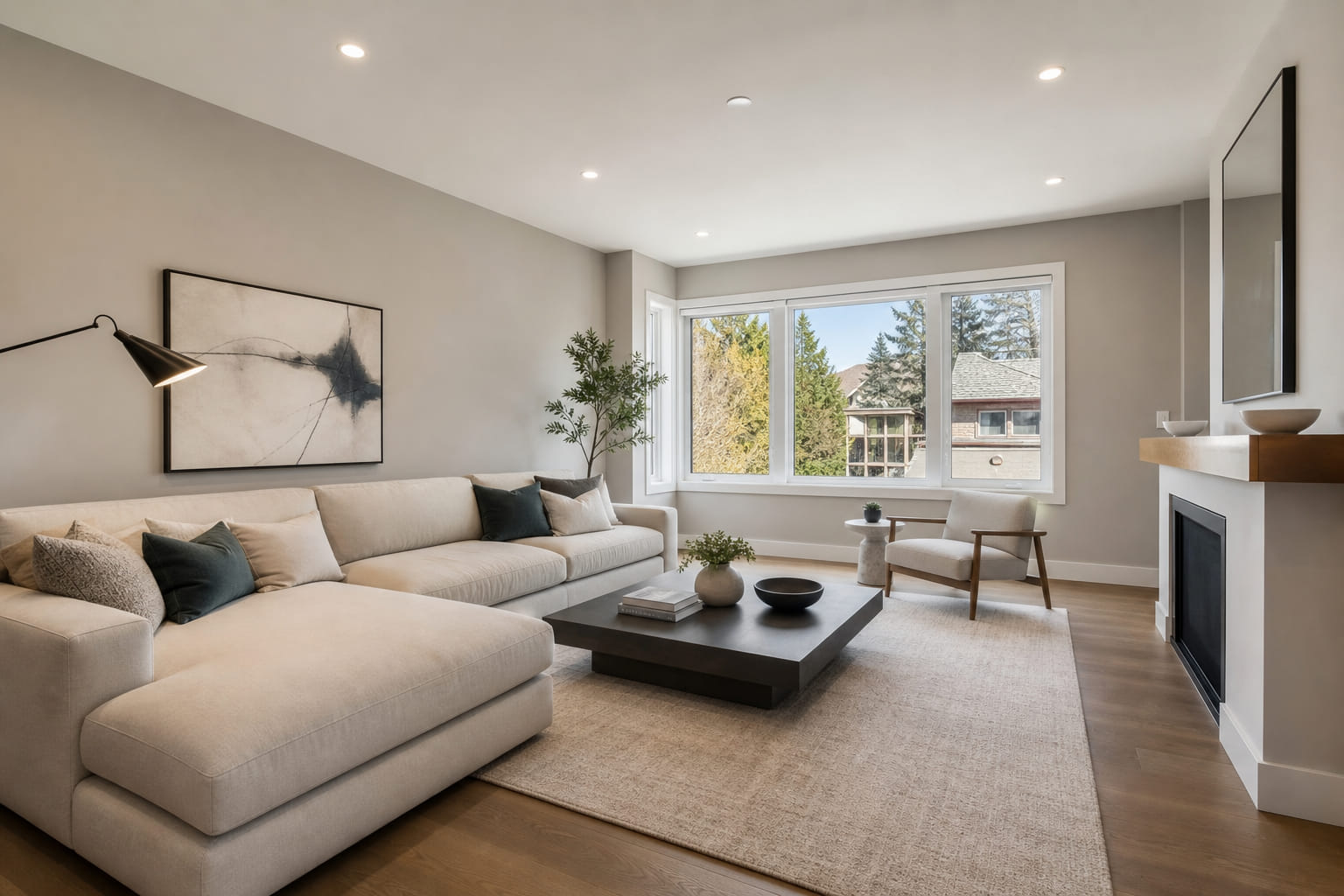
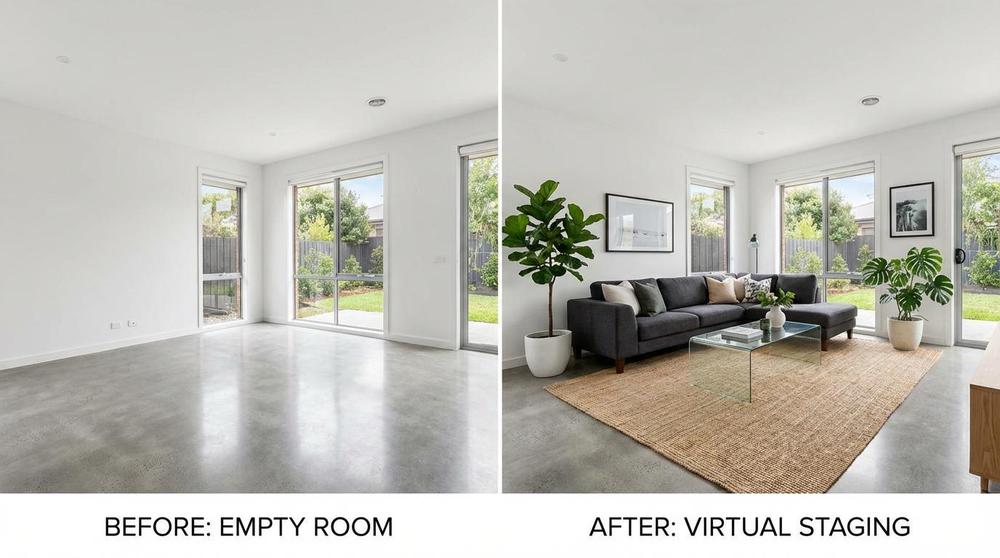
Virtual staging uses software to place realistic furniture, rugs, artwork, and accessories into listing photos. The room itself is empty. The photo looks furnished.
How It Works
A photographer shoots the empty room. Then a designer uses specialized software to add furniture and decor that matches the home’s style. The result is a photo-realistic image that shows the room’s potential.
It’s Not Photoshop Trickery
Good virtual staging looks natural. The furniture fits the room size, the lighting matches, and the style makes sense. Done well, most buyers won’t realize the staging is digital until they read the fine print.
Virtual Staging vs. Physical Staging
Both help sell homes. They just do it differently.
Physical Staging
Real furniture is moved into the home. It looks and feels great in person. But it costs $1,500 to $5,000+ per month, requires scheduling, and the furniture takes up space during showings.
Virtual Staging
Digital furniture is added to photos only. It costs $25 to $75 per image, takes 1 to 2 days, and doesn’t require moving a single couch. The tradeoff? The home is still empty when buyers visit in person.
When to Choose Virtual
Virtual staging works best when the home is completely empty, physical staging isn’t in the budget, or the seller has already moved out. It’s especially useful for vacant listings and investment properties.
When Virtual Staging Works Best
Vacant Homes
Empty rooms photograph poorly. They look small, cold, and hard to imagine living in. Virtual staging solves all of that with a single edited photo.
Outdated Homes
If the current furniture or decor is dated, virtual staging lets you show the home’s potential with modern, stylish furnishings, without asking the seller to redecorate.
Online-First Marketing
Since over 95% of buyers start online, the listing photos matter most. Virtual staging makes those photos compelling even when the home is empty in person.
MLS and Disclosure Rules
Virtual staging is allowed on most MLS platforms, but there are rules.
Label It
Most MLSs require that virtually staged photos be labeled. A simple note like “Virtually Staged” in the photo caption is usually enough. Check your local MLS rules.
Don’t Mislead
Virtual staging should show furniture, not hide problems. Don’t digitally remove stains, cracks, or damage. That crosses the line from staging to deception.
Keep the Original Photos Available
Some agents include both the empty and staged versions in the listing. This builds trust and avoids surprises at showings.
What Rooms Should You Virtually Stage?
You don’t need to stage every room. Focus on the ones that matter most.
Living Room
This is usually the first interior photo buyers see. A staged living room with a couch, rug, and coffee table makes the space feel like home.
Primary Bedroom
An empty bedroom looks smaller than it is. A bed, nightstands, and a few accessories help buyers see the room’s real size and potential.
Dining Room
An empty dining room is just a floor. Add a table and chairs and suddenly it’s a space where families gather.
Skip the Bathroom
Virtually staged bathrooms look odd. Towels and a soap dispenser aren’t worth the cost. Stick to the main living spaces.
How Much Does Virtual Staging Cost?
It’s one of the most affordable marketing tools available.
Per Photo
Most virtual staging services charge $25 to $75 per photo. Complex rooms or luxury styling may cost more.
Compared to Physical Staging
Physical staging starts at $1,500 and can easily hit $5,000 for a full home. Virtual staging for 5 key rooms costs $125 to $375 total. The savings are significant.
Turnaround Time
Most virtual staging is delivered in 24 to 48 hours. Need it faster? Rush options are usually available for a small fee.
Frequently Asked Questions
Can buyers tell if a listing photo is virtually staged?
High-quality virtual staging is very convincing. Most buyers can’t tell from the photo alone. That’s why it’s important to label staged photos so buyers know the home is actually empty.
Does virtual staging help sell homes faster?
Yes. Studies show that staged homes, both virtual and physical, sell faster than empty ones. Buyers connect with furnished spaces more easily, which leads to more showings and quicker offers.
Can I virtually stage a room that already has furniture?
It’s possible but tricky. Virtual staging works best with empty rooms. If a room has outdated or unappealing furniture, it’s better to remove it and then virtually stage the empty space.
Bottom Line
Virtual staging is a smart, affordable way to make empty listings shine online. It helps buyers see a home’s potential, costs a fraction of traditional staging, and can be done in a day or two. If you’re selling a vacant home or marketing on a budget, virtual staging is one of the best tools in your toolkit.