
Quick Answer
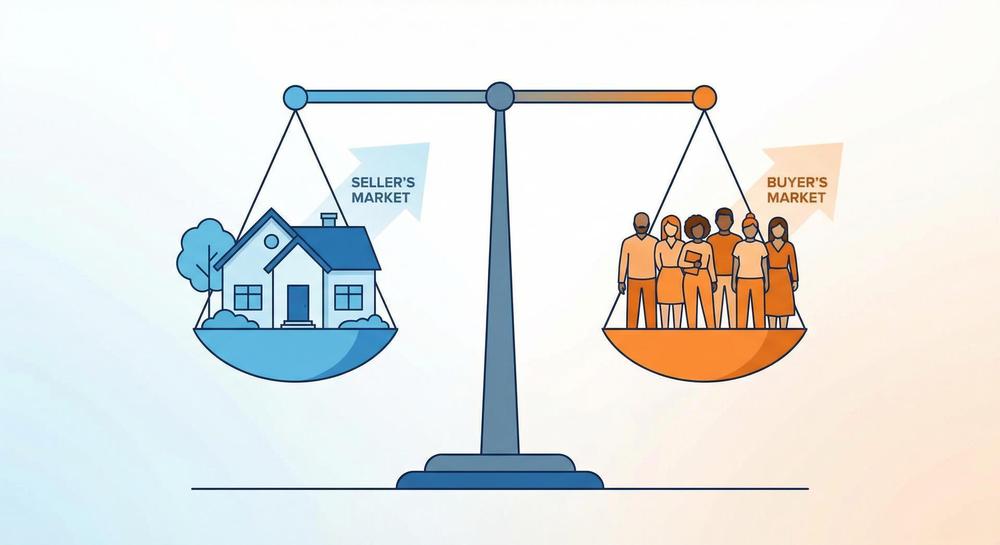
It depends on your local area. A buyer’s market means there are more homes for sale than buyers - giving buyers more choices and negotiating power. A seller’s market means fewer homes and more buyers competing - driving up prices. Check your local inventory and days on market to know which you’re in.
How to Tell the Difference
Three numbers tell you what kind of market you’re in.
Months of Inventory
This is the most important number. It tells you how long it would take to sell all the homes on the market if no new ones were listed.
- Less than 4 months = Seller’s market
- 4–6 months = Balanced market
- More than 6 months = Buyer’s market
Your local agent or MLS can give you this number.
Days on Market (DOM)
This is how long homes sit before they sell.
- Under 30 days = Seller’s market (homes sell fast)
- 30–60 days = Balanced
- Over 60 days = Buyer’s market (homes sit longer)
Sale-to-List Price Ratio
This shows whether homes sell above, at, or below the asking price.
- Above 100% = Seller’s market (bidding wars)
- Around 100% = Balanced
- Below 100% = Buyer’s market (room to negotiate)
What a Buyer’s Market Means for You
If You’re Buying
Good news. You have more options and more power.
- More homes to choose from.
- Less competition from other buyers.
- Room to negotiate on price, repairs, and closing costs.
- Less pressure to rush your decision.
If You’re Selling
You’ll need to work harder to stand out.
- Price competitively from day one.
- Invest in professional photos and staging.
- Be open to negotiations and concessions.
- Make sure your home is in great condition before listing.
What a Seller’s Market Means for You
If You’re Buying
Expect competition.
- Be pre-approved and ready to move fast.
- Make strong, clean offers.
- You may need to offer above asking price.
- Limit contingencies if you can (but never skip the inspection).
If You’re Selling
You’re in a strong position.
- You may get multiple offers.
- Homes sell quickly, often above asking price.
- You have more negotiating power.
- But don’t overprice - buyers are smart and will skip overpriced homes.
Markets Are Local
The national market is just an average. Your town or neighborhood might be completely different.
A city two hours away might be in a seller’s market while your area is balanced. Always look at local data. Ask your real estate agent for a comparative market analysis (CMA) of your specific area.
What to Do in Any Market
For Buyers
- Get pre-approved before you start looking.
- Know your budget and stick to it.
- Work with a local agent who knows the area.
- Don’t panic. The right home will come.
For Sellers
- Price your home based on data, not emotion.
- Use professional photography. First impressions happen online.
- Prepare your home - clean, declutter, and make small repairs.
- Listen to your agent’s advice on pricing and strategy.
Frequently Asked Questions
How do I know if it’s a buyer’s or seller’s market in my area?
Check the months of inventory, average days on market, and sale-to-list price ratio for your zip code. Your real estate agent can pull this data from the MLS. If inventory is low and homes sell fast, it’s a seller’s market.
Should I wait for a buyer’s market to purchase a home?
Not necessarily. Timing the market is almost impossible. If you’re financially ready and find the right home, it’s a good time to buy. In a seller’s market, prices are higher but mortgage rates may be lower. In a buyer’s market, you get deals but rates may be higher.
Can a market be different in the same city?
Yes. One neighborhood can be a seller’s market while another in the same city is balanced. School districts, new construction, and local demand all create micro-markets. Always look at the data for your specific area.
Bottom Line
Don’t worry about the national headlines. Focus on your local market. Check the numbers, talk to a local agent, and make a plan based on real data - not fear.
Your next step: Ask a local real estate agent for a market snapshot of your area. They can tell you exactly what’s happening in your neighborhood right now.