
Quick Answer
You can lower your price without looking desperate. Buyers judge price drops by days on market, not the size of the cut. A strong, strategic price adjustment early on reads as motivated—not desperate. Small cuts after a long time on market read as unmotivated and often cost you more in the long run.

What Buyers Think When They See a Price Drop
Buyers don’t just see a new number. They see your days on market (DOM) too. That combo shapes how they view you.
- Early + strategic cut = Motivated seller. You’re serious about selling.
- Late + small cut = Unmotivated. You’re still chasing top dollar.
- Late + large cut = Motivated, but buyers may wonder why it took so long.
The takeaway: when you cut matters as much as how much you cut.
Why Early Price Adjustments Don’t Look Desperate
Strategic Cuts Early On = Motivated
If your home has been listed for a few weeks with little interest, a meaningful price drop shows you’re paying attention. You’re responding to the market. Buyers see that as smart, not desperate.
- You’re not waiting months to act.
- You’re showing you want to sell.
- You’re still fresh in buyers’ minds.
- Buyers who saved your listing get excited. A price drop can push your home into their budget. Many apps notify them when a saved listing drops—and that alert can turn a “maybe someday” into a serious showing.
Small Cuts + Long Days on Market = The Worst Combo
A small price cut after 60, 90, or 120+ days on market sends a different message. Buyers think:
- You’re still trying to get top dollar.
- You’re not serious about selling.
- You may be hard to work with.
That perception can hurt your final sale price more than the extra money you hoped to keep.
How Days on Market Changes the Story
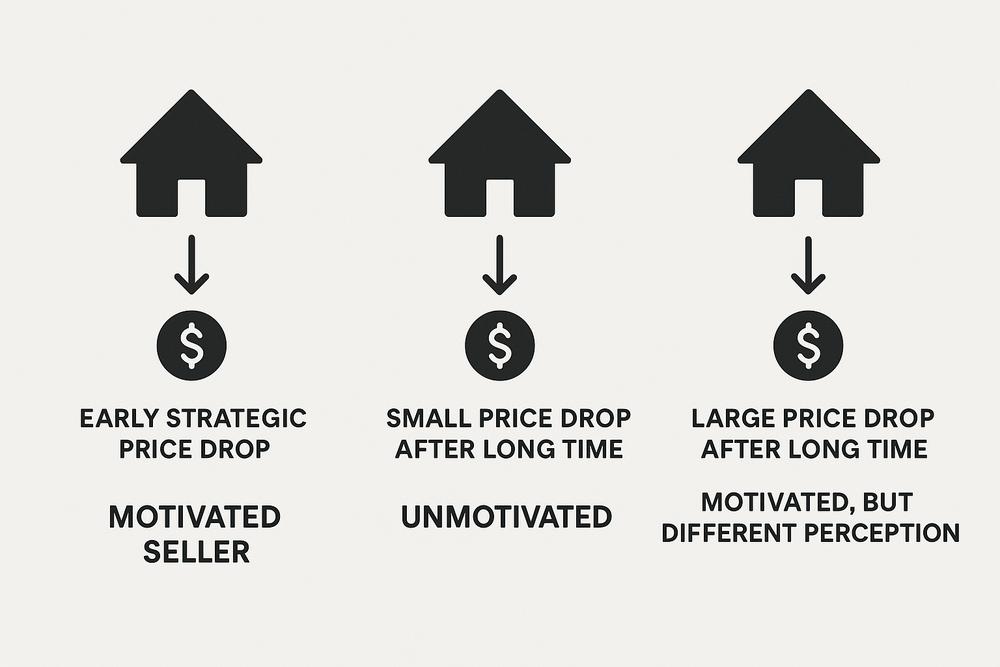
Scenario 1: Strategic Cut Early (Weeks 2–4)
- DOM: Low (under 30 days)
- Cut: Meaningful (e.g., 3–5% or more if needed)
- Perception: Motivated, responsive, serious
- Result: Often attracts new interest and offers—including buyers who saved your listing and now see it as within reach
Scenario 2: Small Cut Late (Months 2–4+)
- DOM: High (60+ days)
- Cut: Small (1–2%)
- Perception: Unmotivated, still chasing top dollar
- Result: Buyers may lowball or skip the listing
Scenario 3: Large Cut Late (Months 2–4+)
- DOM: High
- Cut: Large (5%+)
- Perception: Motivated, but buyers may wonder what took so long
- Result: Can still work, but you’ve lost time and possibly money
What to Do Instead
1. Act Early
If showings and offers are weak in the first 2–4 weeks, talk to your agent. Don’t wait months to adjust.
2. Make Cuts That Matter
Small tweaks (1–2%) after a long DOM rarely move the needle. A meaningful cut (based on your market and comps) shows you’re serious.
3. Use Data
Your agent can show you comparable sales and days on market. Use that to decide when and how much to cut.
4. Refresh the Listing
When you drop the price, consider updating photos or description. It can help the listing feel fresh again.
Frequently Asked Questions
Will lowering my price make me look desperate?
Not if you do it early and strategically. Buyers judge price drops by days on market. A strong cut in the first few weeks reads as motivated, not desperate.
When is the best time to lower my listing price?
When the data supports it—usually within the first 2–4 weeks if showings and offers are weak. Waiting months often hurts more than it helps.
How much should I lower my price?
It depends on your market and comps. Work with your agent. Small cuts (1–2%) after a long time on market often backfire. Meaningful cuts based on data tend to work better.
Why do small price drops after a long time look bad?
Buyers see high days on market plus a tiny cut and assume you’re unmotivated or still chasing top dollar. That can lead to lower offers or no offers.
Does a large price drop after months on market work?
It can. Buyers may see you as motivated. But they may also wonder why it took so long. Acting earlier usually works better.
What is days on market?
Days on market (DOM) is how long your home has been listed for sale. Buyers and agents use it to judge motivation and pricing.
Do buyers get excited when a listing price drops?
Yes. Buyers who saved your listing often get notified when the price drops. If it moves into their budget, that alert can turn interest into a showing or offer.
Conclusion: Act Early, Cut Smart
Price drops don’t have to look desperate. The key is timing and size.
Your action steps:
- Watch the first 2–4 weeks. If interest is low, talk to your agent about a price adjustment.
- Make cuts that matter. Use comps and market data—not small tweaks after months.
- Avoid the worst combo. Small cuts + long days on market = unmotivated in buyers’ eyes.
- Refresh when you cut. New photos or description can help the listing feel fresh.
Strategic price adjustments early on show you’re motivated and responsive. That’s the opposite of desperate.