
Quick Answer
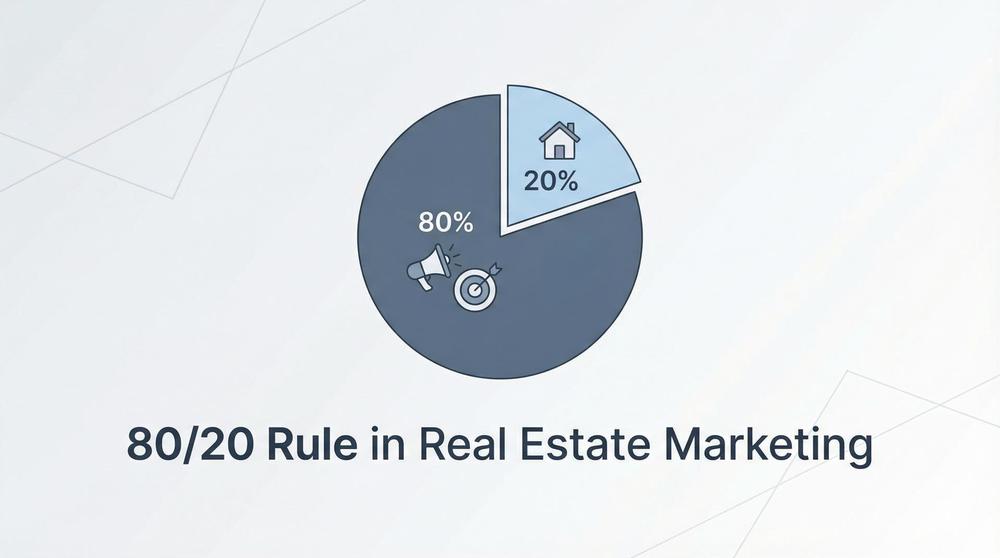
The 80/20 rule in real estate marketing means a small part of your efforts (about 20%) produces most of your results (about 80%). Find which marketing activities actually bring you leads and closings, then do more of those and less of everything else. It helps you work smarter, not harder.
What Is the 80/20 Rule in Real Estate Marketing?
The 80/20 rule says that a few things you do create most of your success. In real estate marketing, that often means a small number of activities bring most of your leads and deals.
- 20% = The few marketing actions that really work for you (e.g., referrals, one or two channels, or a specific type of lead).
- 80% = The results you get (leads, appointments, closings).
You don’t have to do everything. You need to find your best 20% and focus there.
Where the 80/20 Rule Comes From
The idea is called the Pareto principle. An economist noticed that about 20% of people owned about 80% of the land. The same pattern shows up in business and marketing.
For agents, it means: a small part of your marketing drives most of your income. Your job is to figure out which part that is.
How to Use the 80/20 Rule in Your Marketing
Step 1: List What You Do
Write down every marketing activity you use. Keep it simple.
- Social media (which platforms and what you post)
- Website and blog
- Open houses
- Signs and mailers
- Referrals and past clients
- Paid ads
- Cold calling or door-knocking
- Networking and events
Step 2: See What Actually Brings Results
Look at your past year. Which activities led to leads, listing appointments, and closings?
- Track where your last 10–20 leads came from.
- Note which channels led to your last few closings.
- Be honest. Some activities feel busy but don’t bring deals.
Step 3: Do More of What Works, Less of the Rest
Once you know your best 20%, put more time and energy there.
- Spend more time on the channels that bring real leads.
- Cut or reduce activities that rarely convert.
- Say no to new tactics that don’t fit your best 20%.
This is how you use the 80/20 rule in real estate marketing. Focus beats spreading yourself thin.
Common “20%” Activities for Real Estate Agents
Many agents find that a few things do most of the work. Yours may differ.
- Referrals from past clients – One happy client can send you several leads. Stay in touch and ask for referrals.
- Repeat clients – People who bought or sold with you before often come back. Keep them on a simple nurture list.
- One or two strong channels – For some agents it’s Instagram. For others it’s SEO or open houses. Find yours.
- Listing appointments – Getting in front of sellers often leads to listings, which bring buyer leads. Focus on listing lead sources if that’s where you close.
- Your database – People who already know you convert better than cold leads. Email and follow-up matter.
Your “20%” might be different. The rule is to measure and then focus.
What to Do Less Of (The “80%” That Doesn’t Pay Off)
The 80/20 rule also means a lot of what you do brings little return. That’s normal.
- Channels that never convert – If a platform or tactic hasn’t brought a lead in months, cut back or drop it.
- Tasks that feel productive but aren’t – Endless scrolling, tweaking things that don’t move the needle, or attending events that don’t generate leads.
- Spreading yourself across too many platforms – Doing a few things well usually beats doing many things poorly.
Reduce or stop these so you have more time for your best 20%.
Tips to Make the 80/20 Rule Work for You
- Review every few months. Your best 20% can change. Check where your leads and closings are coming from.
- Track in a simple way. A spreadsheet or CRM note like “Source: referral” or “Source: Instagram” is enough.
- Protect time for high-value work. Block time for listing appointments, follow-up, and your top channels. Guard that time.
- Don’t chase every trend. New platforms and tactics are fine to test, but don’t add them at the cost of what already works.
Frequently Asked Questions
What is the 80/20 rule in real estate marketing?
The 80/20 rule means about 20% of your marketing efforts produce about 80% of your results. Focus on the few activities that bring you leads and closings, and do less of the rest.
How do I find my 20% in real estate?
Look at where your last 10–20 leads and your last few closings came from. The channels and activities that show up most are your 20%. Do more of those.
Does the 80/20 rule really work for real estate agents?
Yes. Most agents have a few main sources of business (e.g., referrals, one or two marketing channels). Finding and focusing on those usually increases results without working more hours.
What is the Pareto principle in real estate?
The Pareto principle is another name for the 80/20 rule. In real estate, it means a small number of activities, clients, or channels produce most of your income and leads.
Should I stop all marketing that isn’t in my 20%?
Not always. You can reduce time on low-return activities instead of quitting them completely. The goal is to spend most of your time on what works.
How often should I check my 80/20?
Review every 3–6 months. See where your new leads and closings came from and adjust where you focus your time.
Conclusion: Focus on What Works
The 80/20 rule in real estate marketing is simple: a small part of what you do creates most of your results. Find that part and focus on it.
Your action steps:
- List your marketing activities – Write down everything you do to get leads and listings.
- Track where leads and closings come from – Use your CRM or a simple list. Do this for at least a few months.
- Name your 20% – Which one or two sources bring most of your business? That’s your 20%.
- Do more of that – Block time for those activities. Say no to things that don’t fit.
- Cut or reduce the rest – Spend less time on channels and tasks that rarely convert.
Focus on the few things that work. You’ll get better results without burning out.